Table of content
Before engaging in a home EV charger installation Sydney, you need to look into several factors. Just because having an EV charger right at home would make things easier for you, don’t go there without getting proper advice from a licensed electrician. If the process isn’t handled properly, all you’ll do is blow your budget.
Key Takeaways
This guide walks you through:
- What home EV charger installation in Sydney is in terms of level 1 charging
- Step-by-step instructions for level 2 charging
Steps to Install a Level 1 Charger
Level 1 doesn’t require specific tools. So it’s a DIY job for most people. All you’ve got to do is take the charger out of your EV’s storage compartment and find a power point close to where you park. A garage or covered carport is ideal. The next step doesn’t require explanation. Just plug the charger into the power point and into your EV. The companion app or the EV’s dashboard can be used to monitor charge progress.
Installing a Level 2 Charger
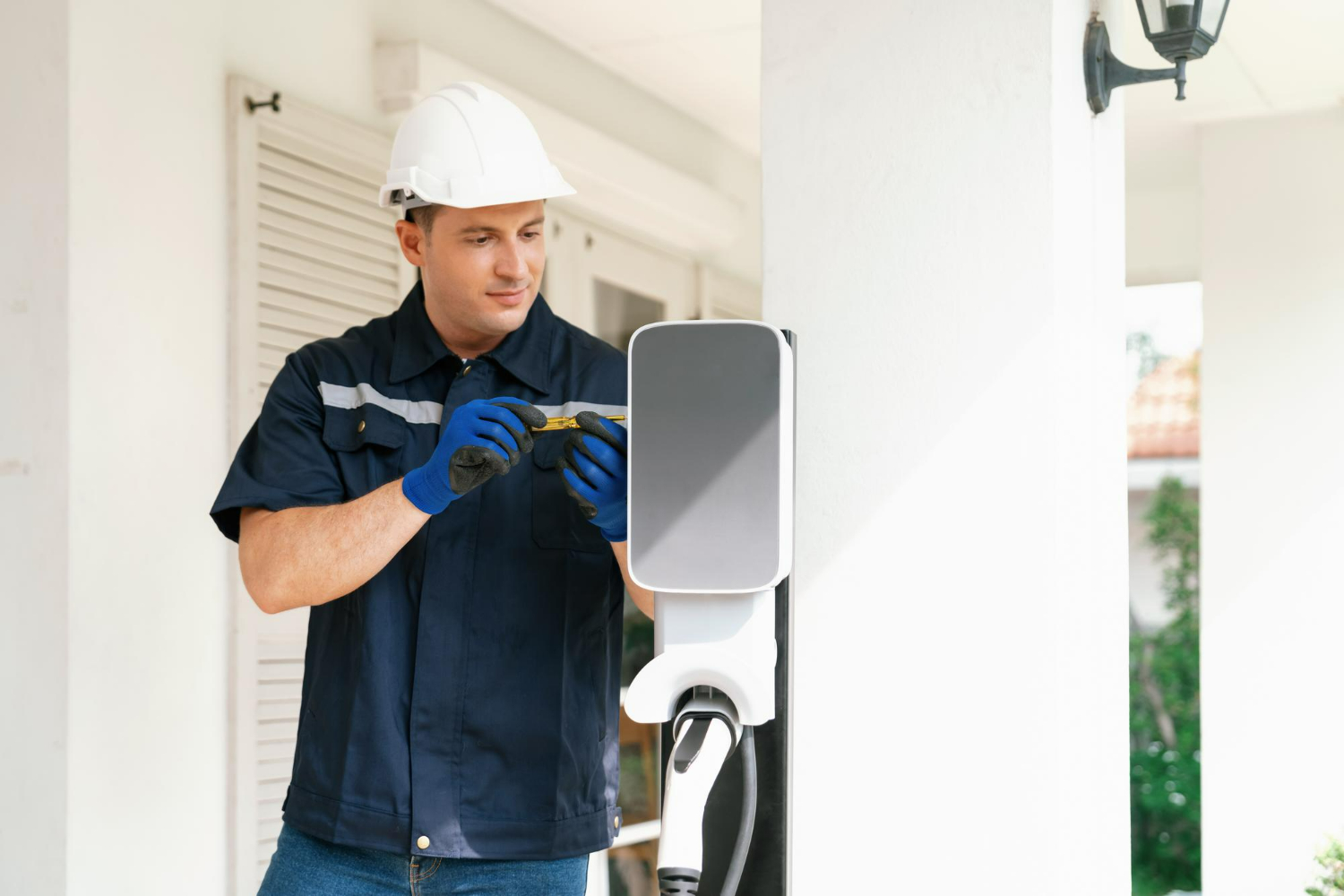
Level 2 home EV charger installation in Sydney must be carried out by a licensed electrician for two reasons: firstly, because a 7 kW charger on a 32-amp circuit draws roughly the same sustained load as a large air conditioner; and secondly, due to the fact that Australian law requires compliance with AS/NZS 3000 (the wiring rules). Only a licensed electrician can issue the certificate of compliance you’ll need, especially if you are selling property or making an insurance claim.
Getting back to the steps to install a level 2 EV charger, here’s what happens during a standard home EV charger installation in Sydney:
1. Switchboard assessment
Your electrician checks whether your switchboard can handle the additional load. This step is necessary because 35-40% of older homes need some level of switchboard work before a charger can be installed. If a switchboard upgrade is needed in terms of replacing full boards, outdated fuses, or undersized wiring, a licensed electrician will identify them before anything else proceeds.
2. Circuit installation
Level 2 EV chargers need their own circuit. To be clear, this circuit cannot be shared with other appliances. The electrician runs new cabling from your switchboard to the charger location routing around existing wiring and plumbing. The installation cost increases depending on the cable run.
3. RCD (safety switch) installation
A residual current device is a legal requirement. It protects against electric shock and electrical faults. No compliant installation goes without one.
4. Mounting and wiring
The charger should be mounted on a sturdy wall. Placement of the charger factors in cable reach, weather exposure, and how you park. For outdoor installations, your charger needs a minimum IP55 weather rating to handle Australian conditions.
5. Testing and certification
The system is tested against Australian standards, and you receive a certificate of compliance. A straightforward home EV charger installation in Sydney takes 2-4 hours. Switchboard upgrades or long cable runs will add time.
6. Smart features and solar configuration
If your charger has app connectivity, the electrician can link it to your WiFi for remote control and scheduling. You can also configure the EV charger to prioritise solar energy if you have solar panels. And if you have a battery, set it to store daytime generation for overnight charging. Note that solar integration triggers a separate compliance standard (AS/NZS 5139), so confirm your electrician is qualified for this work before booking.
Ready to Get Your EV Charger Installed?
If you are based in Australia and want a fully compliant job done on time and on budget, our team at Impulse Electrical Enterprise specialises in residential EV charger installations.
We handle the whole process in terms of any wiring repairs, switchboard upgrades, and solar integration. You don’t have to worry about a thing.
Call us at 0481 228 836 to book a site assessment or get a quote now.