
 Available 24/7Available 24/7
Published: November 05, 2026
A quick overview before you dive in:
A short electrical safety checklist before summer can stop a storm, a blackout or an overloaded power board turning into a bigger problem. Sydney summers bring heat, more appliances running at once, more time outdoors and storms that can bring down powerlines. Most of these checks take a few minutes and need no tools.
This checklist comes from Impulse Electrical Enterprise, a Sydney electrician based in Strathfield. We're licensed and insured, and our director, Matthew Neil, supervises every job. None of the checks involve opening up anything electrical: if one of them turns up a problem, that's the point to call a licensed electrician.
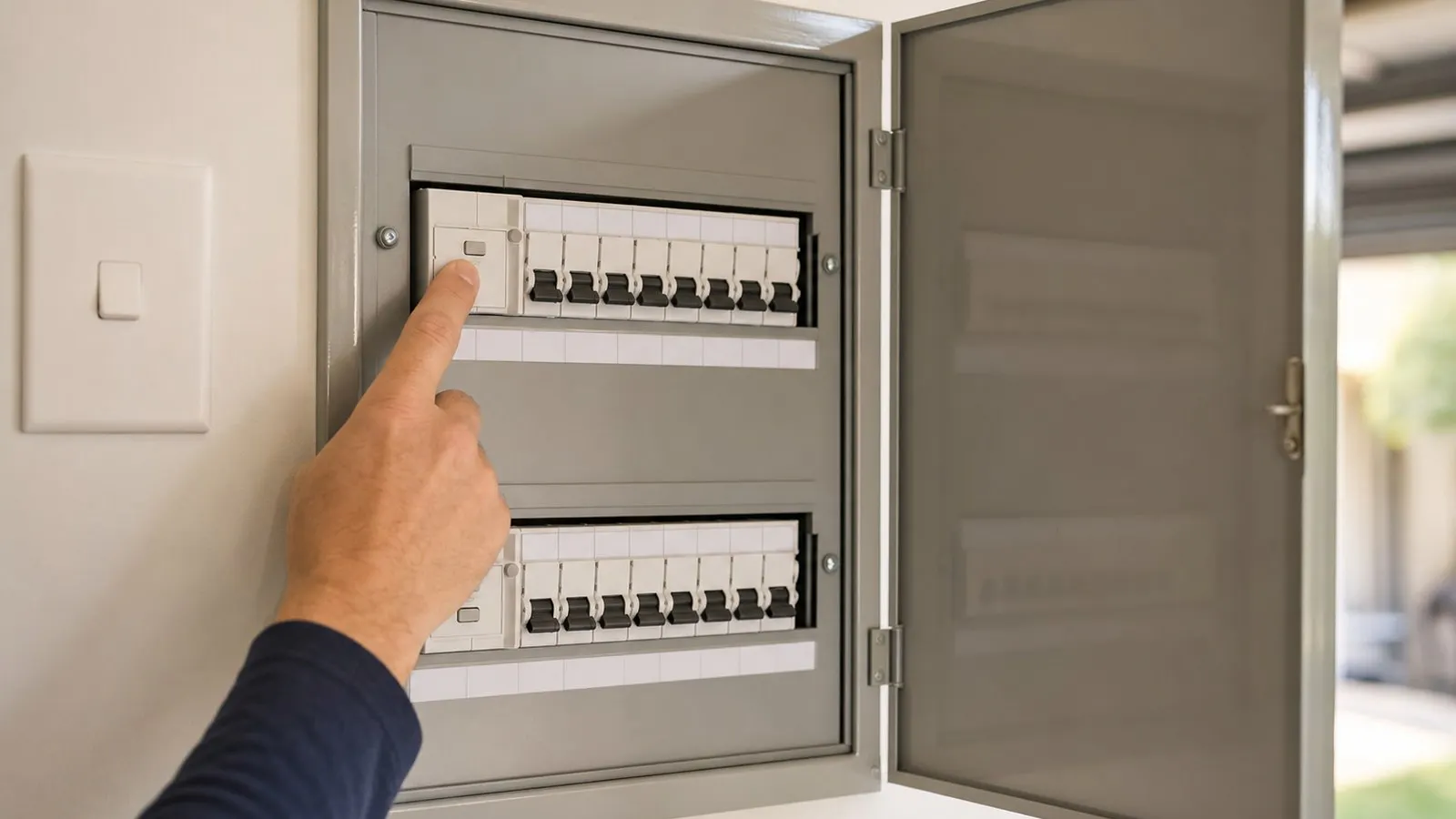
A safety switch, or residual current device (RCD), cuts the power when it detects a fault that could give someone a shock. The NSW Government advises pressing the test button on each safety switch at least every six months. Tell everyone at home first, then press the button marked T or Test on each one in your switchboard: the power to those circuits should go off. Switch it back on.
If a safety switch doesn't trip when you test it, or won't switch back on, have it checked. We offer safety switch testing for $99 + GST per safety switch, with a written report, and we can add safety switches to circuits that don't have them.
Fire and Rescue NSW recommends testing smoke alarms every month by pressing the test button, replacing the battery once a year if your alarm has one you can replace, and replacing smoke alarms every 10 years. Alarms with a built-in lithium battery can't have the battery replaced. The manufacture or expiry date is usually on the base of the alarm. Hardwired smoke alarms must be installed or replaced by a licensed electrician, and we do smoke alarm installation and replacement across Sydney.
Summer means more outdoor power: the pool pump, the barbecue light, the patio fan. Check that outdoor power points have a working weatherproof cover that closes over the plug, and that leads aren't cut, cracked or taped up. Don't use indoor power boards or leads outside. If you're running a lead through a window or across the yard, a permanent weatherproof outdoor power point is the safer fix.
Fans, portable air conditioners, phone chargers and gaming consoles all add up. Fire and Rescue NSW recommends using only power boards with built-in overload protection, not overloading them and giving them room to stay cool. Never plug a power board into another power board, and stop using any that feels hot, is discoloured or smells of burning.
In an emergency you don't want to be searching for the switchboard with a torch. Find it now, and check you can tell the main switch from the safety switches and circuit breakers. If the circuits aren't labelled, it's worth having them labelled. Only switch off the main switch if your hands are dry, you're not standing in water, and the switchboard is dry and undamaged and isn't sparking, smoking or hot. If it is, leave it alone, keep everyone away and call for help from a safe distance. If your home has solar panels or a battery, they can stay live even after the main switch is off, so don't try to inspect or repair them, and tell the electrician when you call.
Before storm season, make sure you have a torch with working batteries and a charged phone. When a storm is coming, unplug sensitive equipment such as TVs and computers to protect them from power surges. If water gets into a light fitting, power point or the switchboard, keep everyone away from it and call an electrician.
Storms and strong winds can bring powerlines down. Always assume a fallen line is live. Stay at least 8 metres away, about two car lengths, keep others clear and report it straight away to Ausgrid on 13 13 88 or Endeavour Energy on 131 003, depending on which network supplies your area. Ausgrid's fallen powerline advice also warns that fallen trees and branches around damaged lines can hide electrical hazards, so treat a tree on a line as dangerous too. If someone is in contact with a fallen line, don't go near them: call triple zero (000).
If your power goes out, look outside first. If the streetlights are off and your neighbours have no power either, it's a network outage: report it or check for updates with your network, Ausgrid on 13 13 88 or Endeavour Energy on 131 003. While you wait, leave one light on so you know when the power comes back, and switch off and unplug sensitive equipment such as TVs and computers to protect them from surges. If it's only your home, the cause could be in your switchboard or wiring, or in your connection to the street. Our guide to what to check when the power is out at your house but not your neighbours' walks through it step by step.
Stop using anything electrical and call an electrician if you notice a burning smell, a hot or scorched power point, sparks, a buzzing switchboard or a safety switch that keeps tripping. If there's smoke, fire or an electric shock, call triple zero (000) first. Our guide to electrical hazard warning signs explains each one.
The NSW Government advises pressing the test button on each safety switch at least every six months. Before summer is a good time to do it.
Fire and Rescue NSW recommends testing them every month, replacing the battery every year if the alarm has one you can replace, and replacing the alarms every 10 years. Alarms with a built-in lithium battery can't have the battery replaced.
No. Use outdoor-rated equipment outside, plug it into a weatherproof outdoor power point, and keep connections off the ground and away from water.
If a safety switch didn't trip, a smoke alarm is past its date or you'd like an outdoor power point added, we can help. Call us on 0481 228 836 or request a free quote.

Founder and Director